
Review · SEVILLE
Seville: Fun class to approach Flamenco
The best part of this Seville flamenco class is that you do not just watch the dance. You learn its basic language: palmas, hand and finger movements, footwork, markings, a call, and a short tango routine. I like the clear build from rhythm to movement, and I like that the lesson finishes with you dancing the whole sequence with the group.
I also like the warm teaching style associated with instructors such as Luna and Elisabeth, who adjust the pace for complete beginners and explain why the movements matter. The main consideration is price: $42.05 per person is fair for a professional, small-group studio lesson, but it can feel expensive if you book alone, especially since a solo booking may become a private class rather than a group session.
Key points at a glance
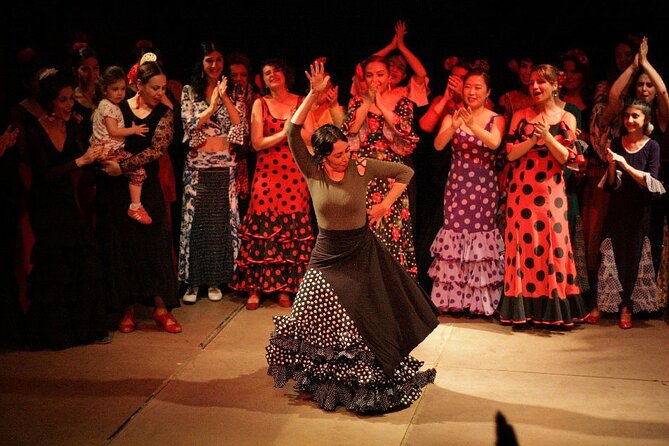
- You learn tangos from the ground up: Start with clapping the rhythm, then add arms, hands, feet, and a short combination.
- The class is beginner-friendly: You do not need previous dance training, and the teacher adjusts the pace.
- It takes place at Plaza Pelícano: The studio is in an artist area of Seville’s old town, with other workshops nearby.
- You get more than a few dance poses: The lesson explains flamenco branches, rhythm, movement, and the demands of the art.
- The class lasts about one hour: It is compact enough to fit before or after sightseeing, but full enough to leave you with a real routine.
- The maximum group size is 30: Actual classes may be smaller, but the published limit allows for a potentially busy session.
Why this short Seville class works
Flamenco can look spontaneous when you watch it in a tablao. A dancer stamps, turns a wrist, raises an arm, and seems to summon the music from nowhere. This class shows you how much structure sits underneath that performance.
You begin with the rhythm of tangos, a flamenco form used for the lesson. The first task is palmas, clapping in time. That sounds simple until you try to keep the beat while listening to the teacher, watching the group, and preparing the next movement. It is a useful first step because it gives you a physical sense of flamenco before you attempt the choreography.
From there, the lesson adds hand and arm positions, foot movements, markings, a call, and a final sequence. The order matters. You are not asked to copy a complete dance immediately. Each piece arrives after the previous one has had time to settle.
I especially like this approach for first-time dancers. You get a small but genuine taste of the work involved. You will not become a flamenco performer in an hour, but you can leave with a better ear, a short routine, and a new respect for the dancers you see later that night.
More Flamenco Dance Classes in Seville
- Seville: Flamenco Dance Class with Optional Costume
★ 4.9 · 1,350 reviews - Flamenco Dance Class in Seville with optional Flamenco Costume
★ 5.0 · 191 reviews - Flamenco Dance Lesson: 60-Minute Class in Seville
★ 4.9 · 81 reviews
Plaza Pelícano and the studio setting
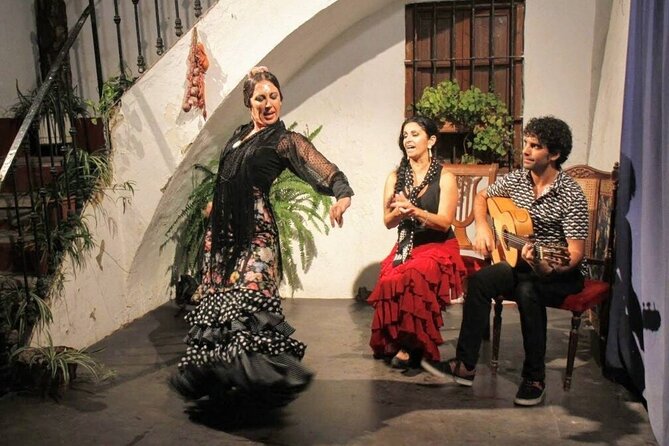
The meeting point is Plaza Pelícano, at Pl. Pelícano in Seville’s Casco Antiguo. The class begins and ends at the same location, so you do not need to arrange a separate return transfer or find your way to another part of town after the lesson.
The setting is part of the appeal. The dance room is described as being in an artist area with workshops and studios nearby. That gives the experience a more local feel than a hotel activity or a staged demonstration in a large tourist venue.
The tradeoff is that the meeting point is not a major landmark that every taxi driver will recognize instantly. Use the full address and allow time to find the studio. Confirmation arrives at booking, so check the meeting details before leaving your hotel.
The studio itself may feel more functional than polished. That is not a problem for this sort of activity. You are there to move, clap, and learn, not to admire a grand room. One practical tip matters: wear comfortable clothing and shoes that let you move safely. One participant specifically found suitable footwear helpful.
The first lesson: finding the compás with palmas
The class opens with palmas, the hand claps that help mark flamenco rhythm. The teacher introduces the tangos compás and gives you time to repeat it. You may clap alone at first, then along with the teacher and the rest of the group.
This is where the class earns its keep. A short explanation of flamenco can stay abstract, but rhythm in your own hands is easier to remember. Once you have tried to keep the pattern, the music and footwork at a later performance become easier to follow.
Do not worry if your first attempts feel awkward. You are coordinating sound, timing, and body position at once. The class is designed around empathy and humor, so mistakes are treated as part of the process rather than a public failure.
You may also hear examples of tangos during this opening section. The point is not to memorize a song. It is to connect the beat you are clapping with the rhythm a dancer uses.
Adding hands, arms, and flamenco posture
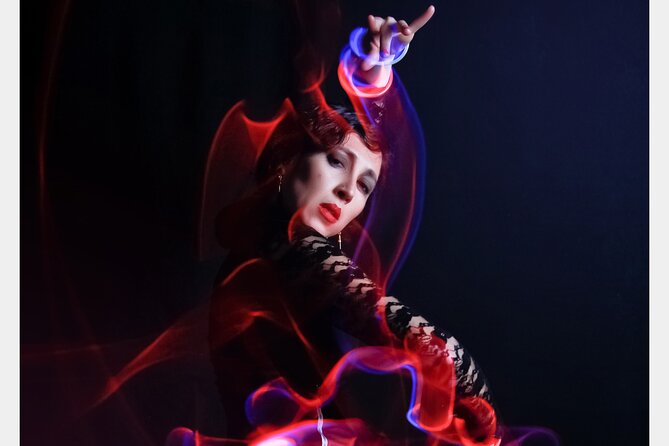
After the rhythm comes the upper body. You learn how to move your hands and arms, including the small finger and wrist details that make flamenco look so distinctive.
This section often surprises beginners. The gestures may appear effortless when performed by a professional, but the correct movement involves coordination and control. Your hands are not simply decorative. They help shape the line of the dance and give the movement character.
The teacher’s role matters here. Luna is described as patient, careful, and good at breaking the movements into manageable pieces. Elisabeth is also praised for clear explanations and encouragement. Those qualities are more useful than a fast demonstration. You need enough time to see a movement, copy it, and understand how it fits with the rhythm.
You should expect to laugh at yourself a little. That is part of the charm. This is not a formal audition, and the atmosphere is intended to keep beginners comfortable.
Same city, a different way to hear it live:
- Seville: Live Flamenco Dancing Show Ticket at the Theater
★ 4.7 · 16,396 reviews - Seville: Casa de la Memoria Flamenco Show
★ 4.8 · 12,964 reviews - Seville: Puro Flamenco Show with Optional Museum Ticket
★ 4.8 · 6,088 reviews - Seville: Live Flamenco Show at “Teatro Flamenco Triana”
★ 4.6 · 3,290 reviews
Footwork, markings, and the short routine
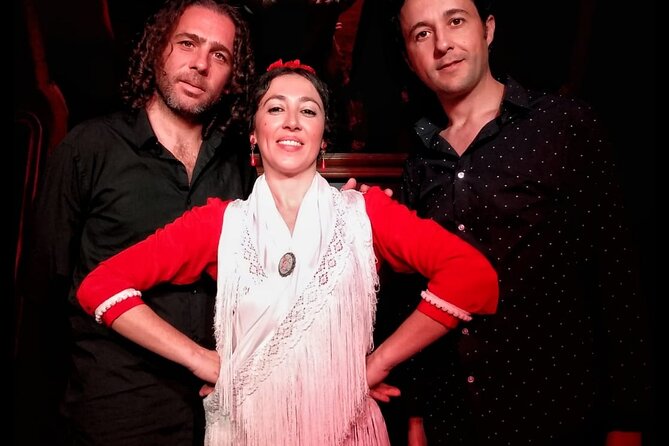
Once the upper body is in place, the class adds foot movements to the tangos beat. You learn several markings, then a call and a shot. The terminology may vary depending on the teacher, but the practical result is a series of steps that can be connected into a small choreography.
The footwork is not presented as a separate exercise with no connection to the rest of the dance. You are gradually asked to combine feet, arms, hands, and rhythm. That is where the hour becomes more demanding.
Expect the teacher to repeat sections and slow the pace when needed. Several lessons have been adapted for people with no dance background, while participants with some experience have been able to progress more quickly. If your group has mixed abilities, the instructor’s attention to pace becomes important.
The final routine is short. Some participants have learned a sequence of roughly 40 seconds, while others have described it simply as a small choreography. That may not sound like much, but it is a useful target for a one-hour introduction. You can remember it, perform it at the end, and understand how separate exercises turn into a dance.
Singing the tango together
Near the end, the instructor sings a tango lyric while the class dances the complete sequence. This gives the lesson a satisfying finish because you are no longer practicing isolated steps.
You hear the rhythm, follow the movement, and perform alongside your classmates. The result may be imperfect, but that is not the point. You experience the relationship between voice, beat, and dance in a way that a short photo session cannot provide.
There is also time for questions about the class or flamenco in general. Use it. Ask about the rhythm you have learned, the different forms of flamenco, or what to watch for at a performance. The teaching style is not limited to counting steps. Instructors have also explained the variety of flamenco styles and why the art can look so different from one performance to another.
What the instructors do well
The strongest part of this activity is the teaching. Luna is repeatedly described as warm, energetic, professional, patient, and passionate. Elisabeth is praised for a relaxed style, clear instruction, and a good balance between information and fun. Lucia is also described as sympathetic and effective at helping a group produce a small choreography in a short time.
Those names appear in connection with different classes, so you should check the current booking details if a particular instructor matters to you. The important point is the teaching pattern: the lesson is structured, friendly, and aimed at participation rather than performance.
The class also seems to work well for different group sizes. A couple, a family, a group of friends, and solo participants have all been accommodated. One person who arrived alone received a private lesson, while another solo booking led to individual attention and a video of the completed routine.
That can be a real advantage, but it also affects value. A private lesson can feel personal and productive, yet $42.05 may seem high if you expected a larger group class. If you are booking with friends, the cost is easier to justify because the activity becomes a shared experience.
How much value do you get for $42.05?
At $42.05 per person, this is not the cheapest way to spend an hour in Seville. It is also not simply a quick dance demonstration. You receive use of a dance studio, professional instruction, a structured lesson, and a complete beginner-level routine.
I think the price works best for people who plan to attend a flamenco performance during their stay. The class gives you practical clues. You begin to notice rhythm, arm positions, hand movements, and the coordination behind a dancer’s footwork. Several participants used the class as preparation for a tablao performance later in their trip and found that it changed what they noticed.
The value is also stronger for friends or couples. You get a shared activity that is active, funny, and easy to remember. It can break up a day of museums and monuments without taking half a day.
For a solo participant, the decision is less obvious. The personal attention may be excellent, but the price can feel steep for a one-hour introduction. If you strongly want to try flamenco and prefer direct instruction, it remains a reasonable choice. If you are only mildly curious, you may prefer to watch a performance and spend the money elsewhere.
Group discounts are available, though the exact saving is not specified. The maximum group size is 30, so do not assume every booking will be private or intimate. A smaller class is possible, but the published capacity allows for a larger group.
Who should book this experience?
I would recommend it first to complete beginners who want to do more than watch flamenco. You do not need to arrive with dance training. The class starts with basic rhythm and builds from there.
It also suits people who feel nervous about dancing in front of others. The repeated emphasis on patience, humor, and a safe atmosphere makes this a better choice than a demanding technical workshop. You still need to participate, but you are not expected to perform like a professional.
Friends, couples, and families can make especially good use of the hour. The class gives you a shared challenge, and the final routine provides a natural ending. One parent even received a video of the dance to show family at home.
Dancers with previous experience may also enjoy it, but the lesson is clearly an introduction. If you want advanced footwork, a long choreography, or intensive training, this may feel too short. The class offers a taste, not a full course.
Practical details before you go
The class lasts approximately one hour. It is offered in English, and most people can participate. Service animals are allowed, and the location is near public transportation.
Wear clothing that lets you move your arms and legs without restriction. Proper dance shoes are helpful, but the supplied information does not specify a required shoe type, so ask the provider if you are unsure. Bring water if you need it, since soda or pop is not included.
The experience is generally booked about 20 days ahead, so reserve early if your Seville dates are fixed. Confirmation is provided at booking. Free cancellation is available up to 24 hours before the start time. After that point, the amount paid is not refunded, and changes are not accepted.
Should you book the flamenco class?
Book it if you want an active, friendly introduction to Seville’s flamenco culture and like the idea of learning a real short sequence. The class gives you rhythm, movement, context, and a shared finale in about an hour. It is particularly worthwhile before a flamenco performance.
Think twice if you want an inexpensive drop-in activity, advanced dance training, or a guaranteed private lesson. The $42.05 price is easier to defend for a small group or a solo visitor who values individual attention.
For most beginners, I would book it early in a Seville stay, then attend a performance afterward. You will watch with sharper eyes and better ears, and you may find yourself quietly marking the tangos beat with your hands.
FAQ
Where does the flamenco class begin?
The class begins at Plaza Pelícano, Pl. Pelícano, Casco Antiguo, 41003 Sevilla, Spain. It ends back at the same meeting point.
How long does the class last?
The class lasts approximately one hour.
Is the class suitable for complete beginners?
Yes. The lesson begins with basic palmas and gradually adds arm movements, hand positions, footwork, markings, and a short routine. Most people can participate.
What style of flamenco will I learn?
The class teaches a short patá por tangos, including the tangos rhythm, hand claps, upper-body movements, footwork, a call, and a final sequence.
Is the class offered in English?
Yes. The experience is offered in English.
What is the cancellation policy?
You can cancel at least 24 hours before the local start time for a full refund. Cancellations or changes made less than 24 hours before the start time are not accepted for a refund.
More Dance Workshops in Seville
- Flamenco Dance Lesson with Optional Show in Seville
★ 5.0 · 38 reviews - Learn to Dance Flamenco from Zero: Fun Beginners’ Dance Class
★ 5.0 · 32 reviews - Seville: Enjoy a class of approach to flamenco
★ 5.0 · 24 reviews - Flamenco Drum Box Workshop in Seville
★ 5.0 · 6 reviews
Just added around Seville
- Unforgettable Seville: Tour of Seville and the Jewish Quarter + Flamenco Show★ 4.0 · 4 reviews
- Tapas and Flamenco in Seville★ 4.5 · 34 reviews
- Espectáculo Flamenco Tablao “Las Setas”★ 5.0 · 59 reviews
- Seville Pure Flamenco Tour★ 3.5 · 5 reviews
- Flamenco show in the heart of Triana★ 4.5 · 55 reviews
- Seville Flamenco Show with Dinner and Flamenco Costume Museum★ 4.5 · 5 reviews
- Seville Pass: Cathedral + Alcazar + Flamenco Show★ 3.5 · 2 reviews
- Seville Private Tapas & Wine Experience with Flamenco Show★ 5.0 · 7 reviews
Flamenco Dance Classes, compared.
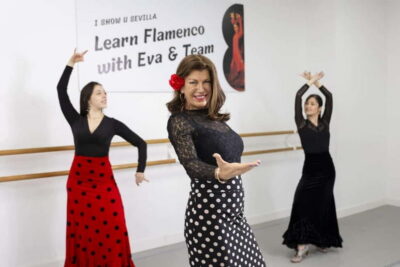
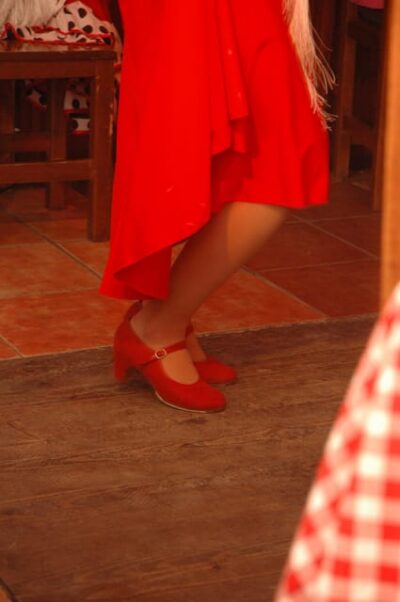
Flamenco Dance Class in Seville with optional Flamenco Costume
Read our review →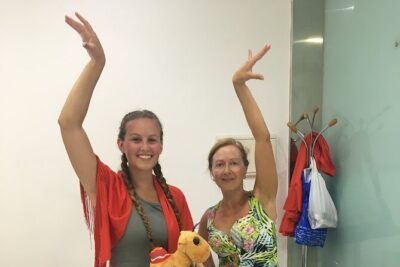
Fun, fast, flamenco: learn to dance flamenco rumba in 45 minutes
Read our review →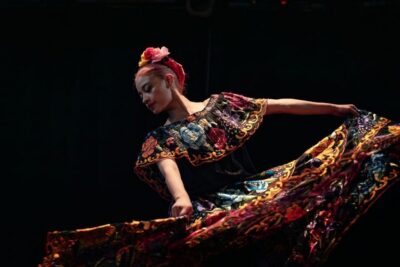
Flamenco Dance Lesson: 60-Minute Class in Seville
Read our review →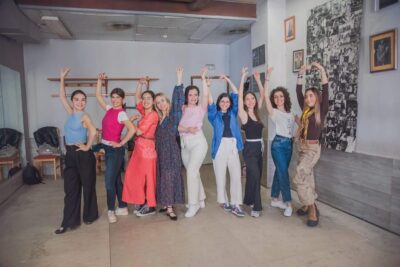
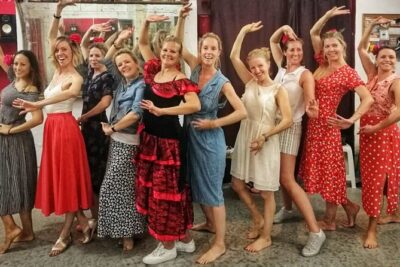
Flamenco Dance Lesson with Optional Show in Seville
Read our review →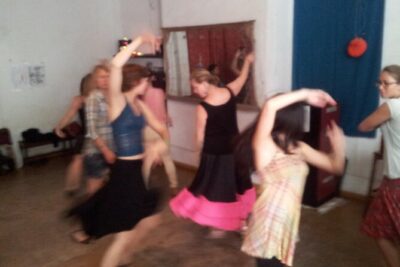
Learn to Dance Flamenco from Zero: Fun Beginners’ Dance Class
Read our review →Browse the lists this tour appears in